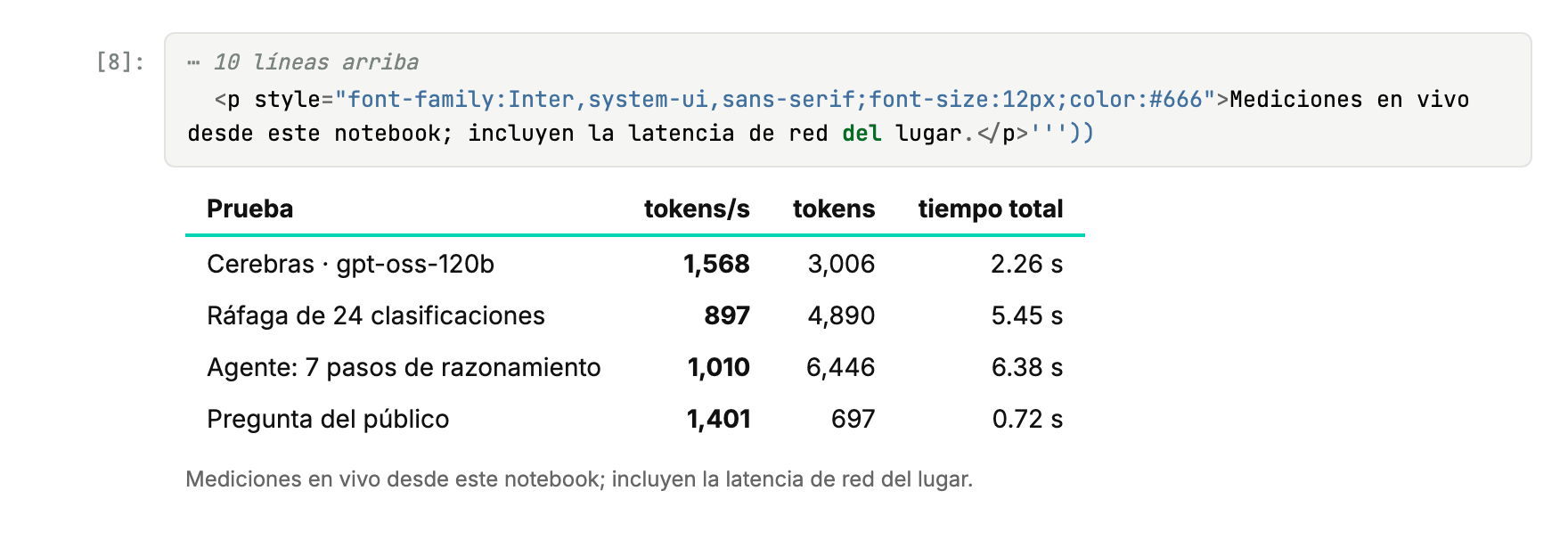
At Café Compute, during Mexico Tech Week, we measured live what happens when inference stops being the bottleneck. The model is gpt-oss-120b, served by Cerebras. We ran the notebook end to end again, and here are the numbers, each one measured by the notebook itself.
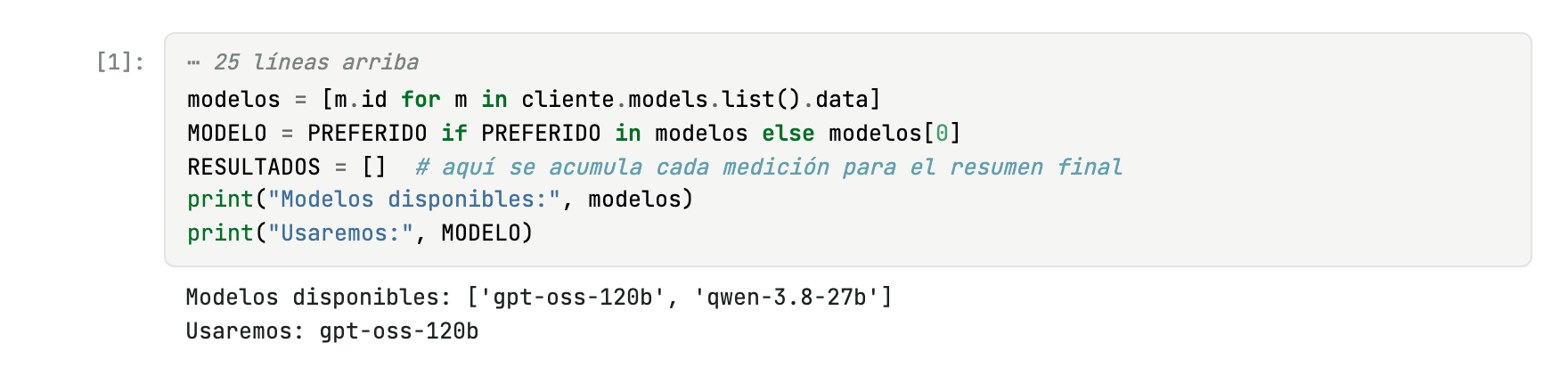
The notebook uses the same openai library as the workshops. Only the service address and the key change. On connecting, it lists the available models and picks gpt-oss-120b.
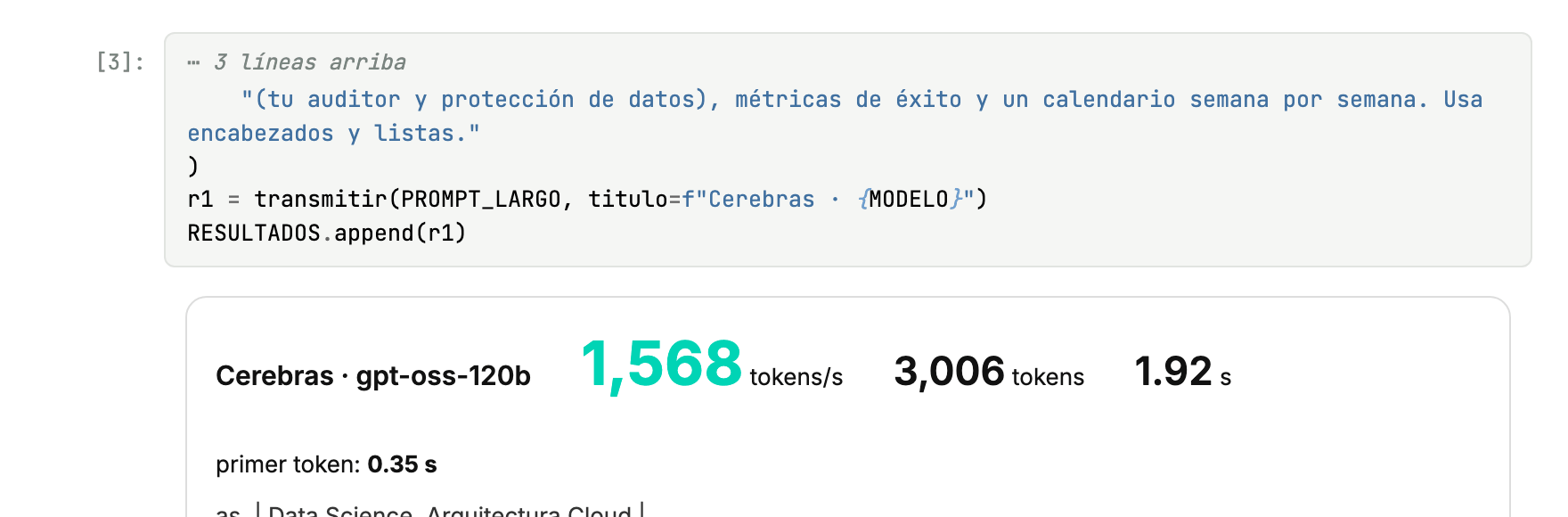
We asked the model for a 90-day plan for a customer service team to adopt generative AI: diagnosis, use cases, risks, metrics and a calendar. The notebook counts the tokens as they arrive.
The first token arrived at 0.35 seconds. From there it wrote 3,006 tokens in 1.92 seconds: 1,568 tokens per second. The full document, counting that initial wait, took 2.26 seconds.
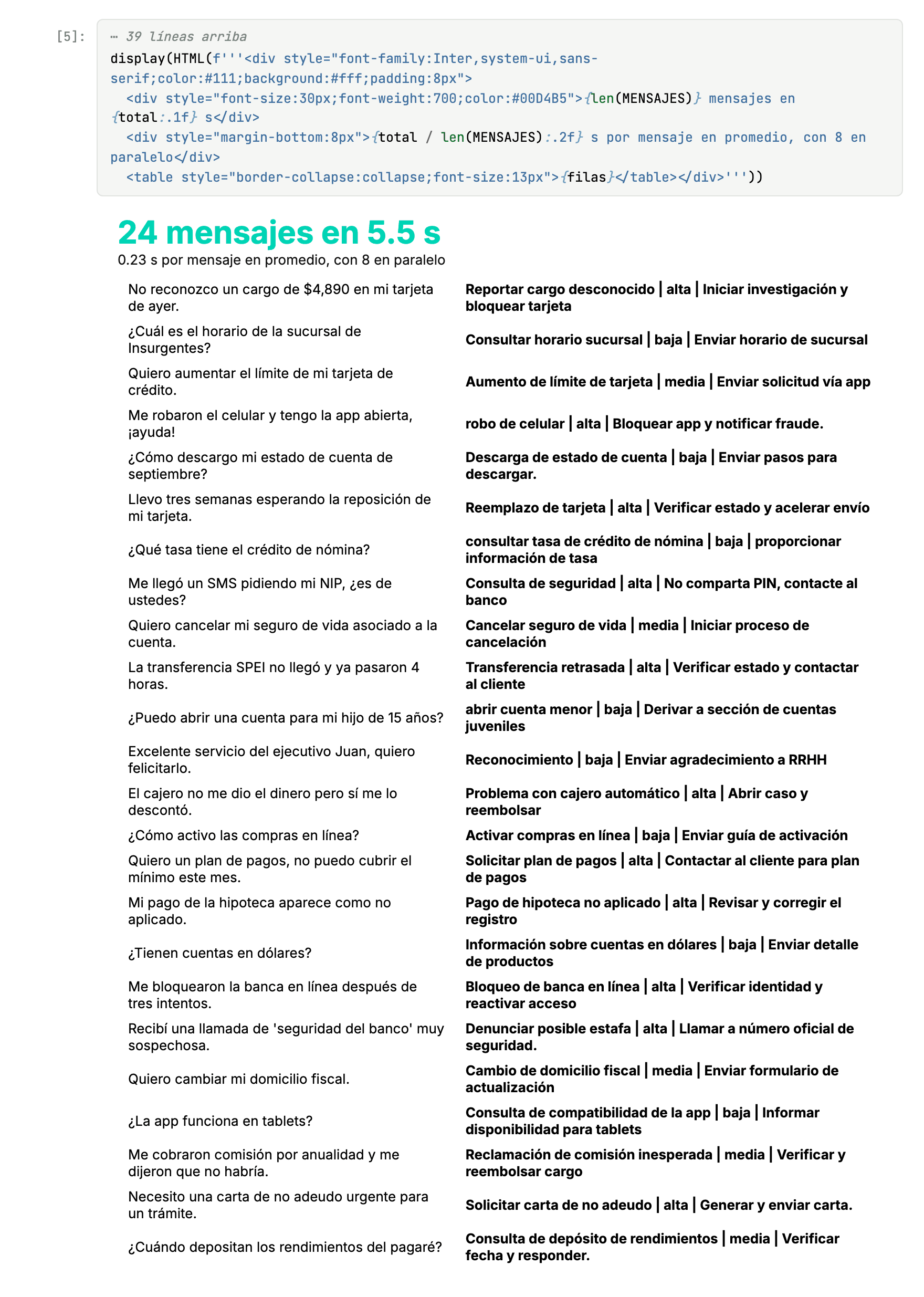
A contact center never stops receiving messages. The notebook classifies 24 at once by intent and urgency, eight in parallel, and suggests the next action for each one.
The whole batch took 5.5 seconds: 0.23 seconds per message on average.
The same cell took 363.6 seconds on October 27. In that run each agent draft came back in 1 or 2 seconds, but some steps took almost a minute. That points to queueing or the account's rate limit, not to the model. The speed of one call does not guarantee the speed of a batch: how much the provider lets you ask for counts too.
The case: a customer is upset because her car loan payment was charged twice. The agent writes a reply, critiques it, fixes it, and repeats the cycle three times. That is seven chained calls.
Each step took between 0.54 and 1.39 seconds. All seven together, 6.4 seconds.
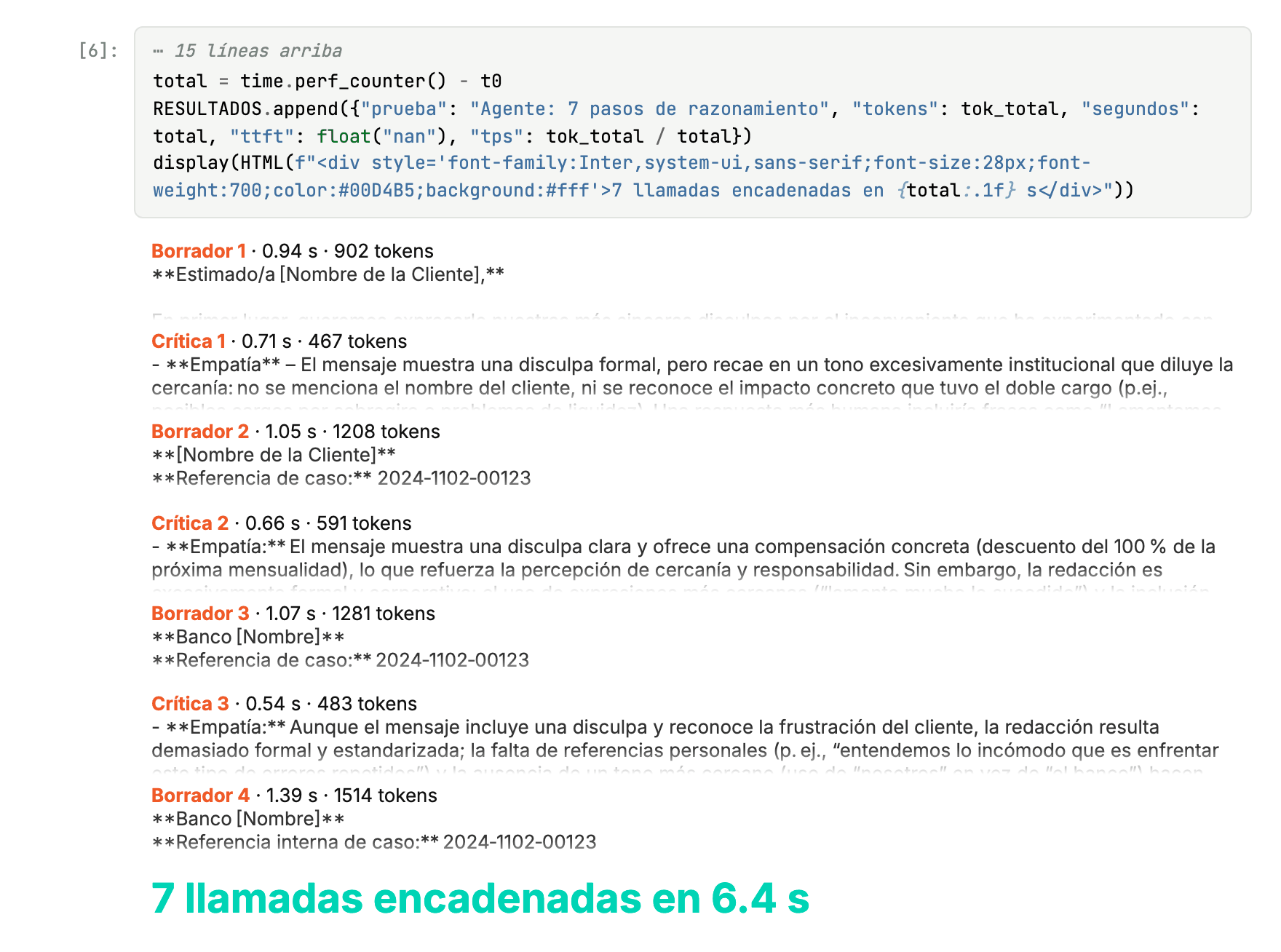
With slow inference, an agent that reviews itself is expensive and people lose patience. When each call takes a second, reviewing three times stops being a luxury. Speed changes which agent designs are reasonable.
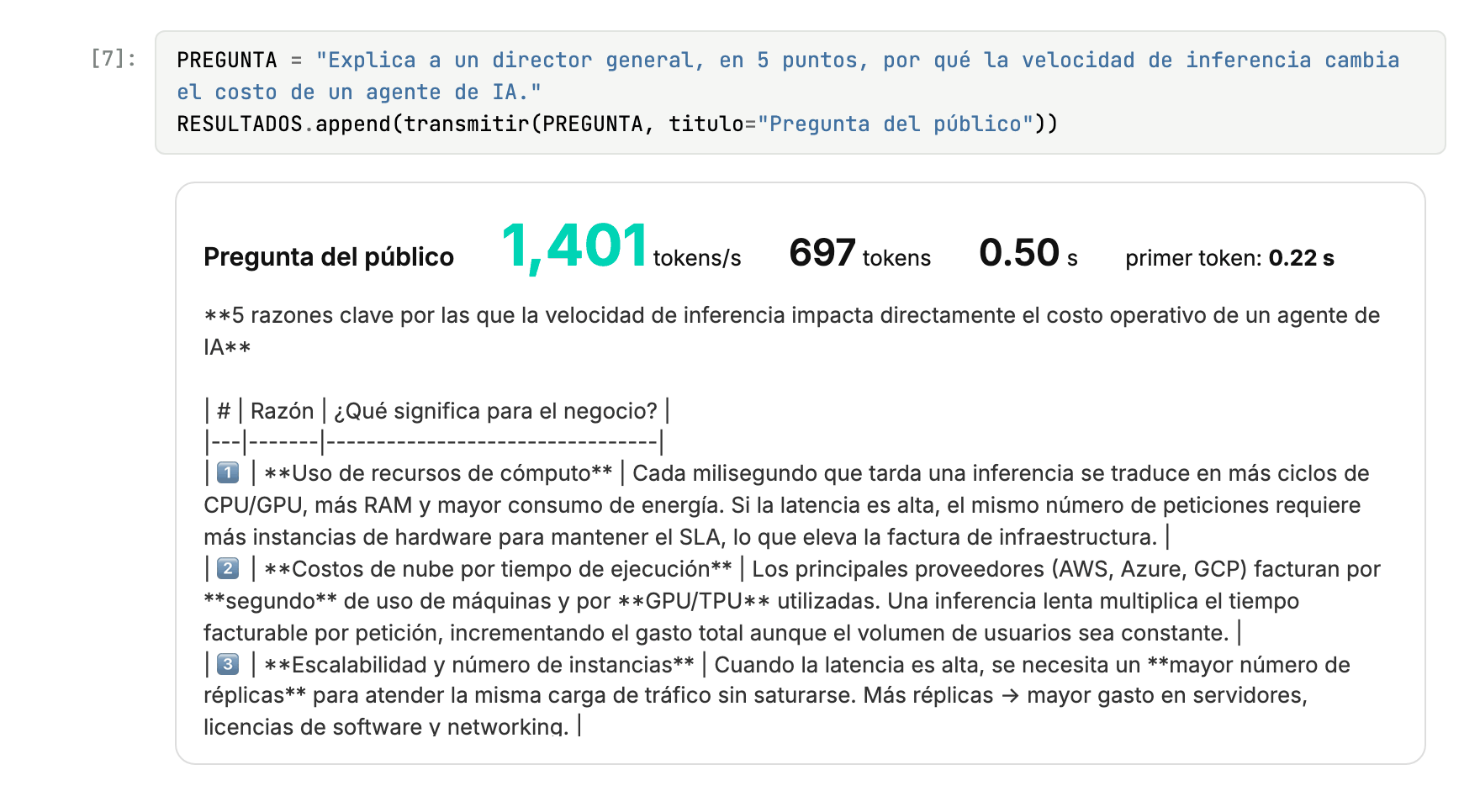
At the event, the audience writes the question. In this run we used the one the notebook ships with: why inference speed changes the cost of an AI agent, in five points for a chief executive.
The last cell gathers the four tests. Total time includes the wait for the first token and the network latency of the place where it ran.